
Fiber Cement Siding for Cincinnati, OH Homes
Fiber cement is the category — James Hardie is the brand most Cincinnati homeowners know by name, but it's not the only option. Fiber cement siding is a composite material made from Portland cement, sand, and cellulose fibers, pressed and cured into panels that resist moisture, fire, impact, and insects. It's engineered to perform where wood rots, vinyl warps, and aluminum dents.
For Cincinnati's Ohio River valley climate — with its sustained humidity, harsh freeze-thaw cycles, and severe storm exposure — fiber cement is the most durable siding material available for residential use. Call (123) 456-7890 for a free fiber cement siding estimate.
How Fiber Cement Performs in Cincinnati
Fiber cement addresses the specific failure modes that other siding materials face in this climate:
It doesn't absorb moisture. Cincinnati's summer humidity regularly exceeds 70%. Wood siding swells and rots in these conditions. Fiber cement remains dimensionally stable — it won't swell, warp, or develop mold within the material itself.
It handles freeze-thaw. Products manufactured for HardieZone 5 (Cincinnati's climate zone) are formulated to resist cracking through 80+ freeze-thaw cycles per winter. The cement composition handles the expansion and contraction that cracks lesser materials.
It's non-combustible. Unlike vinyl (which melts) and wood (which burns), fiber cement doesn't contribute to fire spread. This is a meaningful safety benefit, particularly for homes with close-set neighbors in dense Cincinnati neighborhoods like Over-the-Rhine, Mount Adams, and East Walnut Hills.
It holds paint longer. Factory-applied finishes on premium fiber cement products last 15-20 years before repainting. Field-painted wood siding in Cincinnati's climate typically needs repainting every 5-8 years.
Fiber Cement vs. Other Siding Materials
| Factor | Fiber Cement | Vinyl | Wood | Aluminum |
|---|---|---|---|---|
| Lifespan | 30-50 years | 20-40 years | 15-30 years | 25-40 years |
| Moisture resistance | Excellent | Excellent | Poor | Excellent |
| Fire resistance | Non-combustible | Melts | Burns | Non-combustible |
| Maintenance | Repaint every 15-20 years | Wash only | Repaint every 5-8 years | Repaint every 5-8 years |
| Impact resistance | High | Moderate | Moderate | Low (dents) |
| Cost (installed) | $8-$18/sq ft | $4-$11/sq ft | $8-$15/sq ft | $5-$10/sq ft |
Fiber cement costs more upfront than vinyl but typically costs less over a 30-year ownership period when maintenance, repainting, and replacement cycles are factored in.
Fiber Cement Brands Available in Cincinnati
James Hardie is the dominant brand — roughly 90% of fiber cement installations in the U.S. use HardiePlank products. Their HardieZone system, where products are formulated for specific regional climates, is a genuine engineering advantage for Cincinnati installations.
Allura (formerly CertainTeed fiber cement) offers comparable products at slightly lower price points. Available in lap, panel, and shingle profiles.
Nichiha focuses on architectural panels with modern aesthetic profiles — popular for contemporary designs and commercial-to-residential conversion projects.
All three brands perform well in Cincinnati's climate when installed correctly. The installation quality matters more than brand differences at this level.
Frequently Asked Questions
Is fiber cement siding better than vinyl?
It's more durable, more fire-resistant, and holds paint longer. But it costs significantly more and requires professional installation. For homeowners prioritizing longevity and willing to invest upfront, fiber cement is the better long-term choice. For budget-focused projects, vinyl delivers strong value at a lower price point.
Does fiber cement siding crack?
It can — primarily from impact, improper nailing (overdriving fasteners), or freeze-thaw cycling in products not rated for the climate zone. Choosing HardieZone 5 products for Cincinnati installations and ensuring proper installation technique prevents cracking under normal conditions.
How heavy is fiber cement siding?
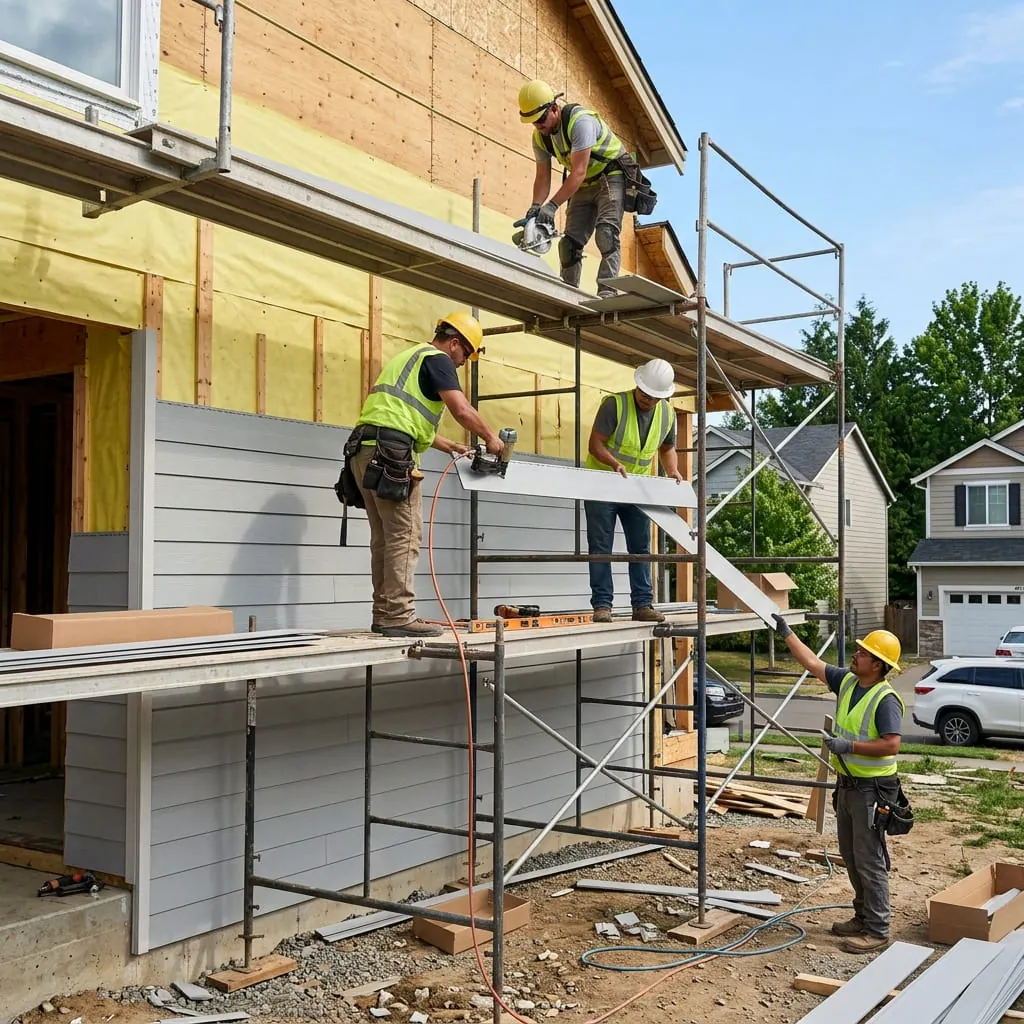
Fiber cement panels weigh roughly 2.5 pounds per square foot — significantly heavier than vinyl (0.5 lbs/sq ft). This requires experienced installation crews, proper scaffolding, and sometimes additional structural evaluation to confirm the wall framing can support the weight.
Can fiber cement be installed in winter?
Yes, with precautions. The material itself handles cold temperatures, but caulks and sealants need above-freezing conditions to cure properly. Most Cincinnati contractors schedule fiber cement installations to avoid extended freeze periods.
Is fiber cement good for historic Cincinnati homes?
Excellent. Fiber cement mimics the appearance of wood clapboard, shingles, and board-and-batten without the maintenance and rot issues. For historic neighborhoods like Hyde Park, Mount Lookout, and Clifton — where architectural consistency matters — fiber cement is often the best choice for maintaining period character with modern performance.
Get a Free Fiber Cement Siding Estimate
Considering fiber cement for your Cincinnati home? Call (123) 456-7890 for a free estimate. An on-site inspection determines the right product, identifies any structural prep work needed, and provides a clear project scope and cost.