
Fast, Reliable Siding Repair in Cincinnati, OH
A cracked panel or a loose section of siding might look like a minor cosmetic issue — until Cincinnati's next rainstorm drives water behind it. In the Ohio River valley, where humidity stays elevated for months and freeze-thaw cycles can hit 80+ times per winter, even small siding damage becomes a structural problem fast. Moisture that gets behind the cladding feeds mold on the sheathing, accelerates wood rot in the framing, and drives up energy costs as insulation gets wet and loses effectiveness.
If your siding is cracking, buckling, pulling away from the wall, or showing signs of water intrusion, getting it repaired quickly is the most cost-effective way to prevent a full siding replacement down the road. Call (123) 456-7890 for a free repair assessment.
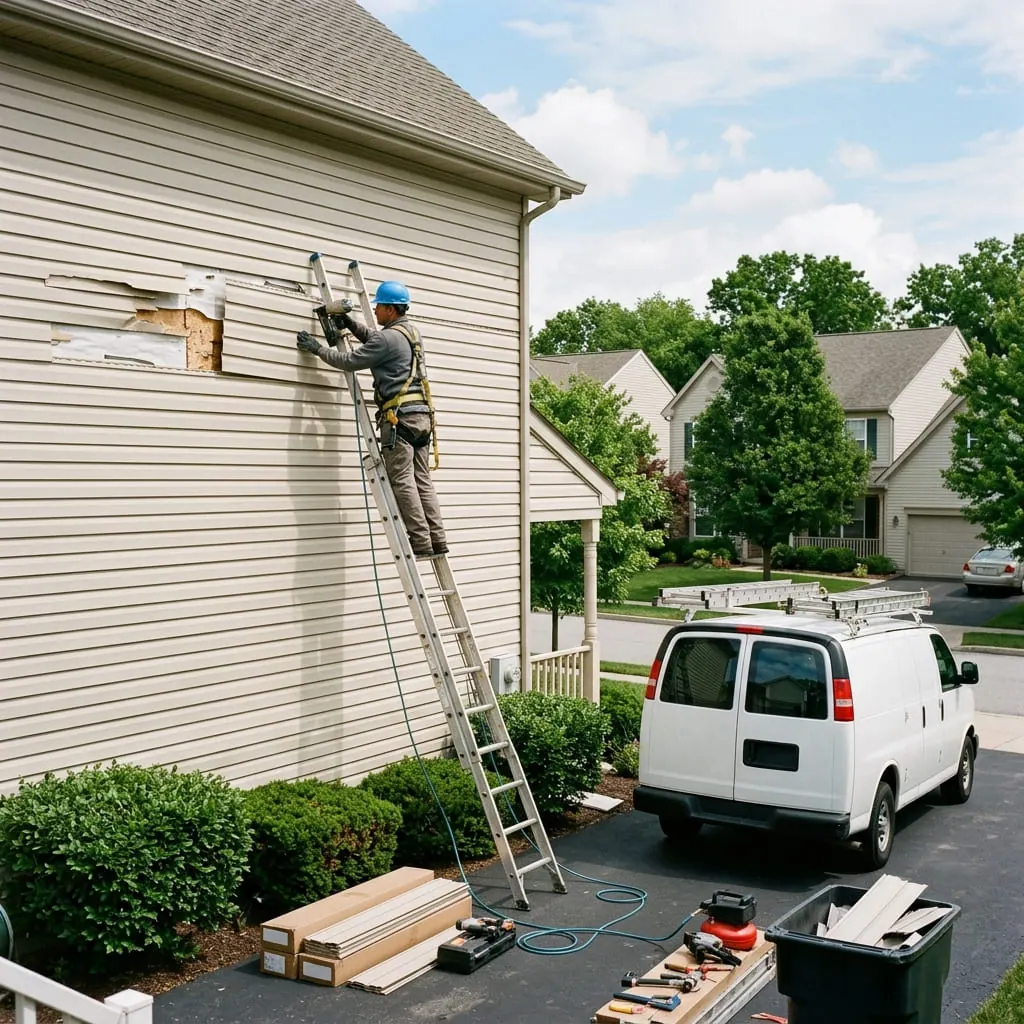
Common Siding Problems in Cincinnati Homes
Cincinnati's climate creates a specific set of siding failures that homeowners across the metro deal with regularly. Understanding what's happening — and why — helps you know when a repair will solve it and when replacement is the better investment.
Cracking and splitting. Vinyl siding expands in summer heat and contracts in winter cold. When panels are nailed too tightly during installation — a surprisingly common shortcut — they can't flex with temperature changes. The result is hairline cracks that widen over successive seasons. Fiber cement can also crack from impact or from moisture that freezes inside micro-fractures during winter.
Warping and buckling. Prolonged heat exposure on south and west-facing walls causes thin or lower-grade vinyl to warp. In Cincinnati, homes in open neighborhoods like West Chester, Liberty Township, and Fairfield — where walls get full afternoon sun without tree cover — see this more often than shaded properties.
Loose or detached panels. Spring thunderstorms and high-wind events regularly pull siding panels loose, especially on upper stories where wind loads are higher. A single detached panel exposes the house wrap and sheathing underneath to direct rain, starting the moisture damage cycle.
Moisture damage and mold. The Ohio River valley's sustained humidity creates ideal conditions for mold and mildew on and behind siding. If you see dark staining on your siding, soft spots when pressing on the wall, or musty smells near exterior walls, moisture has likely penetrated behind the panels. This is the most urgent repair scenario — the longer it sits, the more the damage spreads into the wall cavity.
Pest damage. Woodpeckers, squirrels, and insects can damage wood and fiber cement siding, creating entry points for moisture. Older homes in wooded neighborhoods across Anderson Township, Milford, and Loveland are particularly prone to this.
Fading and discoloration. While not structural, severe fading — especially uneven fading — often indicates UV degradation that's weakening the material. If the surface feels chalky or brittle to the touch, the siding is reaching the end of its functional life.
How Siding Repair Works
Professional siding repair isn't just snapping a new panel into place. A proper repair addresses both the visible damage and whatever caused it.
Step 1 — Inspection. A thorough exterior inspection identifies all damaged areas — not just the obvious ones. Siding problems tend to cluster, and fixing one panel while missing three others that are about to fail wastes time and money.
Step 2 — Damage assessment. The critical question is whether the damage is limited to the siding or has reached the sheathing and framing behind it. If moisture has penetrated, repairing the siding alone won't stop the rot — the underlying structure needs attention first.
Step 3 — Material matching. For partial repairs, the replacement panels need to match the existing siding in profile, thickness, and color as closely as possible. Exact color matching can be challenging on older siding that has faded — an experienced contractor will know how to source discontinued profiles or find the closest current match.
Step 4 — Repair and reinstallation. Damaged panels are removed, underlying issues are addressed, and new panels are installed with proper nailing and clearances. Flashing and caulk around windows, doors, and trim are checked and resealed as needed.
Step 5 — Quality check. Every repaired section is inspected to confirm panels are properly seated, nails aren't overdriven, and all transitions are sealed against wind-driven rain.
Siding Repair vs. Replacement — When Is Repair Enough?
Not every siding problem requires ripping everything off and starting over. Here's how to think about it:
Repair makes sense when:
- Damage is limited to a few panels or one section of the house
- The underlying sheathing and framing are still sound
- The rest of the siding is in good condition and has years of life left
- Storm damage is isolated to one wall or area
Replacement makes more sense when:
- Damage is widespread across multiple walls
- You're finding moisture damage or rot behind the panels
- The siding is 20+ years old and showing systemic failures (cracking, warping, fading throughout)
- Repair costs are approaching 40-50% of what full replacement would cost
- Energy bills have increased noticeably — often a sign that the entire siding system is no longer performing
A professional inspection can tell you which path makes sense for your specific situation. There's no reason to replace an entire house worth of siding when three panels on the west wall are the only problem — and there's no point patching panels on a 25-year-old installation that's failing everywhere.
Siding Repair Costs in Cincinnati
Repair costs depend on the extent of damage, material type, and whether the underlying structure needs work:
| Repair Type | Typical Cost Range |
|---|---|
| Single panel replacement (vinyl) | $150 – $400 |
| Section repair (multiple panels, one wall) | $400 – $1,200 |
| Storm damage repair (multiple areas) | $500 – $2,500 |
| Repair with sheathing/framing work | $1,000 – $4,000+ |
| Fiber cement panel repair | $300 – $800 per panel |
These ranges reflect Cincinnati-area pricing. The biggest cost variable is what's behind the siding — if the sheathing is rotted or framing is compromised, the repair scope expands significantly. That's why an inspection before quoting matters. Call (123) 456-7890 for a free assessment.
Areas Served for Siding Repair
Cincinnati Siding Pro provides siding repair across the Greater Cincinnati metro:
Cincinnati
- Hyde Park
- Oakley
- Clifton
- Northside
- Mount Lookout
- East Walnut Hills
- Western Hills
- Price Hill
- Delhi
- Pleasant Ridge
Northern suburbs
- West Chester
- Liberty Township
- Mason
- Fairfield
- Hamilton
Eastern suburbs
- Anderson Township
- Milford
- Loveland
- Batavia
- Amelia
Western suburbs
- Harrison
- Cleves
- North Bend
Frequently Asked Questions
Can I repair just one or two siding panels?
Yes. If the damage is isolated and the surrounding panels are in good condition, replacing individual panels is a straightforward repair. The key is matching the profile and color as closely as possible. On older homes where the exact product may be discontinued, an experienced contractor can source the closest available match.
How quickly should I repair damaged siding in Cincinnati?
As soon as possible — especially before winter. Cincinnati's freeze-thaw cycles will turn a small crack or gap into a much larger problem within one season. Moisture that gets behind damaged panels during fall rains will freeze, expand, and cause additional cracking and panel displacement through the winter months.
Will my homeowner's insurance cover siding repair?
Storm damage from wind, hail, and fallen debris is typically covered under most homeowner's policies in Ohio. Damage from normal wear and tear, deferred maintenance, or age-related deterioration is generally not covered. Document the damage with photos and contact your insurer before starting repairs if you believe the damage is storm-related.
Can damaged siding cause higher energy bills?
Yes. Siding that's cracked, loose, or has gaps allows conditioned air to escape and outside air to infiltrate. In Cincinnati, where summer cooling and winter heating both run hard, even small breaches in the siding envelope can add noticeably to monthly utility costs.
How do I know if the damage goes deeper than the siding?
Soft spots when pressing on the wall, musty odors near exterior walls, visible mold or discoloration on interior surfaces near the wall, and peeling interior paint are all signs that moisture has penetrated past the siding into the sheathing or framing. These situations require more than panel-level repair.
Get a Free Siding Repair Estimate
Don't let a small crack become a major problem. Call (123) 456-7890 for a free siding repair assessment. Every inspection includes a clear explanation of the damage, what's causing it, and exactly what the repair involves — so you can make an informed decision.