Fiber cement
Resists moisture, pests, and rot, which suits shaded lots. It also reproduces the look of painted wood clapboard, which keeps an older colonial or split-level looking right for its age.

Anderson Township is on Cincinnati's east side, and it has a different feel from the newer northern suburbs. Many homes date from the 1960s through the 1980s and sit on mature, tree-lined lots on hilly terrain, with classic colonials, split-levels, and ranches along roads like Beechmont Avenue, Clough Pike, and Nagel Road. Their original siding was painted wood, cedar, aluminum, or hardboard, and most of it has been through several decades of Ohio River valley humidity.
Trees are great for shade and hard on siding. Shaded walls stay damp longer, which encourages mildew and slowly works on caulk, trim, and older wood. On homes this age, the real question is usually not what the siding looks like but what is happening behind it. If your Anderson Township home has stained, soft, or peeling exterior areas, call (513) 468-5818 to reach a siding contractor in Anderson Township.
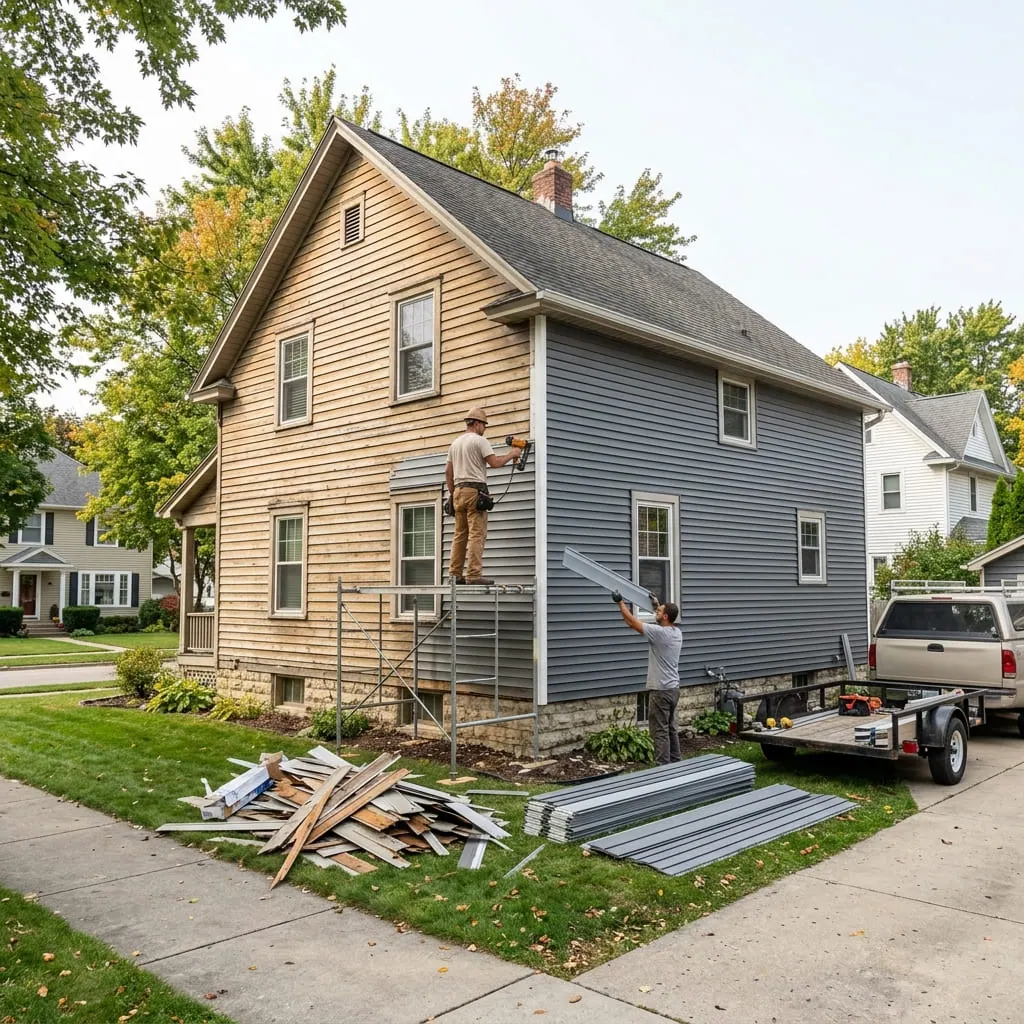
The older, wooded character of the area comes with a specific mix of original materials:
A proper siding job on a Anderson Township home starts with an exterior inspection, so the scope matches what the walls actually need.
On mature wooded lots, moisture is the common thread. These are the failures that turn up most often on homes from the 1960s through the 1980s:
Rot in the lowest courses and at corners. Splashback, leaf litter, and shrubs held against the wall keep the bottom of the siding damp. Once the paint film and caulk fail, water wicks into wood clapboard and hardboard from the bottom edge, and the rot travels into the sheathing behind.
Missing or failed roof-to-wall flashing. Split-levels and multi-level rooflines have many spots where a roof meets a wall. Older homes often lack kick-out flashing there, so roof water runs down the wall behind the siding instead of into the gutter, rotting the same few feet of wall year after year.
Hidden damage behind aluminum. Aluminum was often nailed over wood siding without house wrap. Condensation and small leaks stay trapped, so a dented but intact wall can conceal rotted sheathing. This is why tear-off and inspection matter on these homes.
Mildew and algae on north and east walls. Shaded walls stay wet. Surface mildew washes off, but when it is paired with soft spots, peeling paint, or a musty smell inside, it points to moisture in the wall. Overflowing gutters under overhanging trees make it worse.
Good fits for Anderson Township homes include:
Resists moisture, pests, and rot, which suits shaded lots. It also reproduces the look of painted wood clapboard, which keeps an older colonial or split-level looking right for its age.
Adds insulation value for older homes with thin walls, with low upkeep on shaded elevations. Installed over a new weather barrier, it is the practical choice for replacing aluminum.
For homeowners who want a natural look and are ready for the upkeep. On shaded lots, good detailing, back-priming, and ground clearance matter as much as the wood itself.
A complete siding job in Anderson Township comes down to who you hire and what the scope covers. Verify these before work starts.
Serving homeowners across Anderson Township and nearby Mount Washington, Newtown, and Withamsville. Also serving the rest of Greater Cincinnati. Nearby: West Chester, Mason, Liberty Township.
Fiber cement and vinyl both resist rot and stand up well to damp conditions, while wood needs more upkeep on shaded walls. Whatever you choose, the details matter: keep the bottom course off the ground, trim shrubs and branches back, and keep gutters clear so water does not run down the wall.
Yes. Old aluminum can be removed and replaced with vinyl or fiber cement. Removal also lets a contractor inspect the sheathing, which is often damp or rotted behind aluminum on 1960s and 1970s homes, and add a proper weather barrier and flashing before the new siding goes on.
It can be. Older wood siding and trim may have lead-based paint, and federal rules require lead-safe work practices when painted surfaces are disturbed. Ask any contractor whether they follow them. Some older homes also have cement-based shingles that should be identified before removal. Address both before work begins.
Surface mildew on north-facing or shaded walls is common and can be cleaned. But dark staining with soft spots, peeling paint, or a musty smell inside can mean moisture is getting behind the siding. Press on the lowest boards and trim with a screwdriver tip. If it sinks in, get an inspection.
It can help, especially with insulated vinyl or added house wrap and sealed transitions. The gains are largest on 1960s-80s homes with air leaks around windows and thin wall insulation. Expect a more comfortable house and less moisture trapped in the walls, not a dramatic change in your bills by itself.
Work is performed by independent professionals.
Siding work on a Anderson Township home starts with an exterior inspection that sets the scope. Call (513) 468-5818 to reach a siding contractor in Anderson Township and surrounding Greater Cincinnati.